Current Restoration Work
Historic Oxbow Reconnection and Restoration Project
The Historic Oxbow Reconnection and Restoration Project is the next phase of QNR-led Quillayute River restoration, taking place in summer and fall 2026. The main goals of this project are to help protect downstream communities from river flooding and to improve the abundance and health of salmon and steelhead.
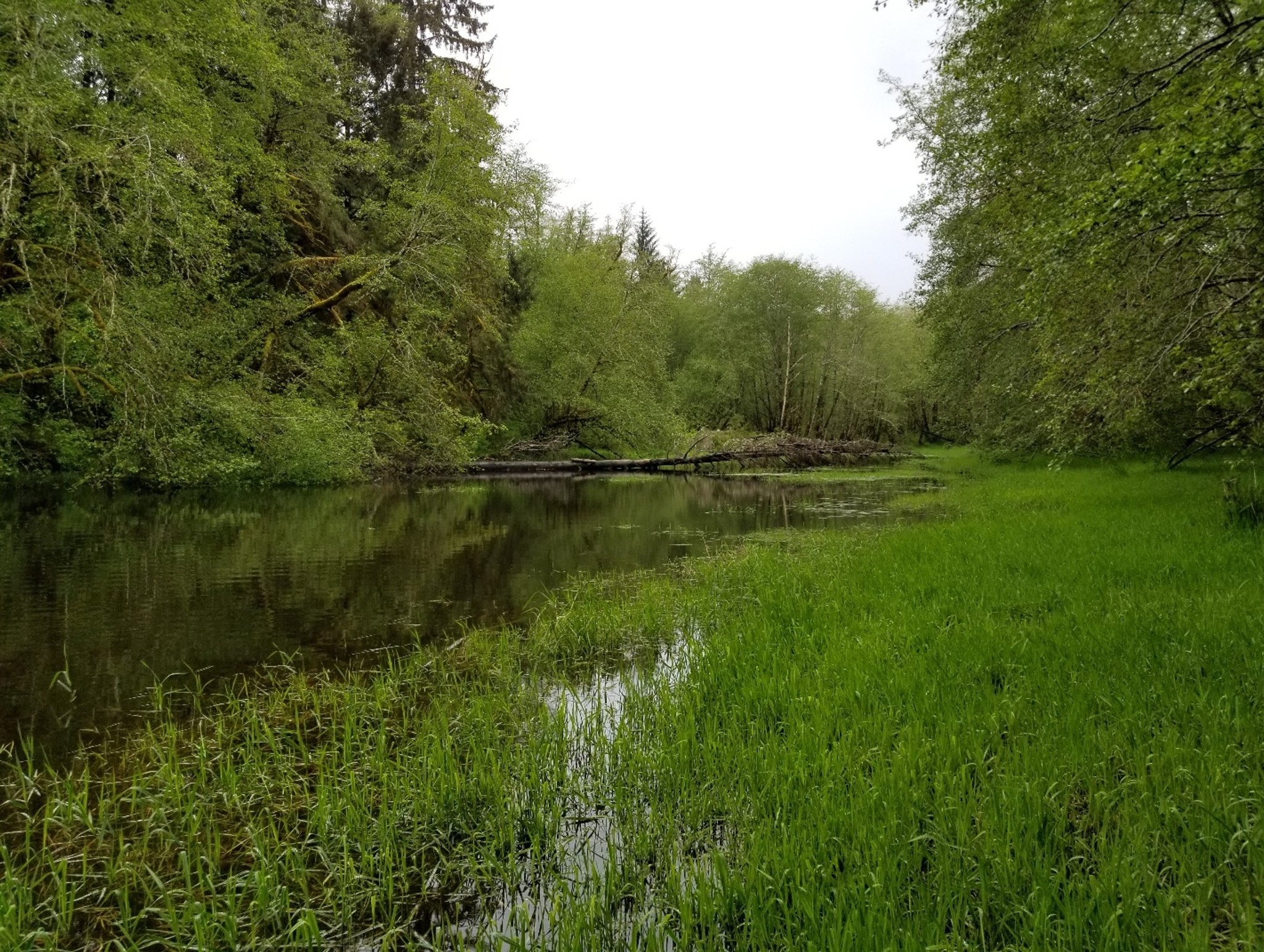
Sheltered ponds and wetlands in the Historic Oxbow will make excellent rearing habitat for juvenile salmon. Photo Credit: Ronald Hope.
Historic Oxbow Project Overview:
Project activities will involve earthworks at the inlet and outlet of the Historic Oxbow, placement of wood structures on the south bank of the Quillayute River and replanting the site with native plant species. After the project is completed, the river will still flow through its existing path, but during the rainy season, some of the high flows will be directed through the Oxbow bend (see image). This will help restore the river’s natural functions, add essential salmon habitat, and dissipate intensity of flooding.
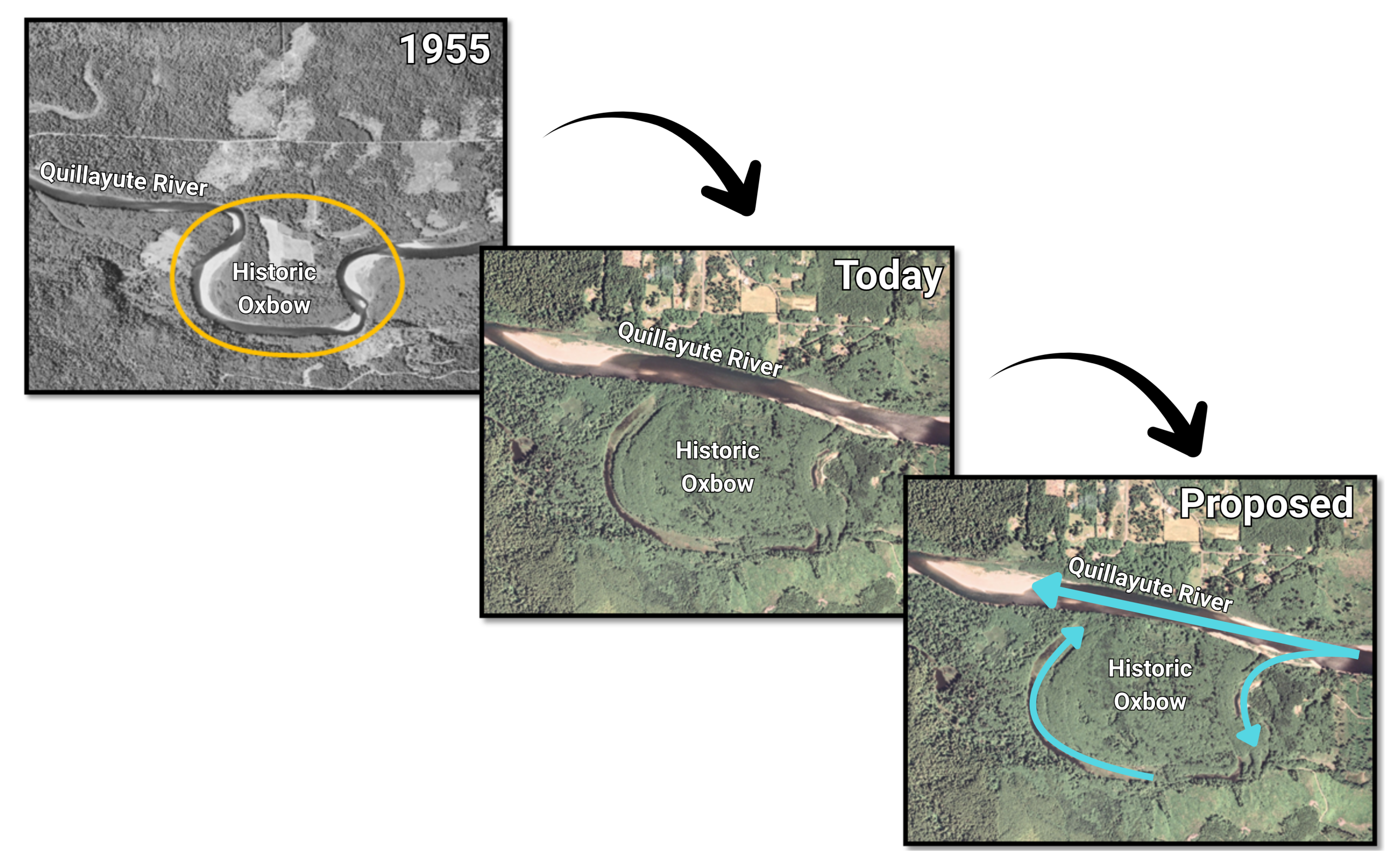
Aerial imagery shows the Quillayute River when the Historic Oxbow was still part of the main channel (1955) and the modern-day Oxbow, a series of disconnected perennial ponds (Today). The Historic Oxbow Reconnection and Restoration Project would reconnect the Oxbow to the main channel just enough that high winter flows spill over into the Oxbow, providing flood relief and protected salmon habitat (Proposed). Photo Credit: QNR
Why Reconnect the Oxbow?
This project is needed to counteract the loss of salmon habitat that has occurred over the past century due to floodplain disconnection, loss of in-stream wood, and rising water temperatures.
This restoration project aims to:
- Improve salmon habitat in the Quillayute and add more than 2 miles of wetland and side channel salmon habitat
- Reconnect more than 100 acres of floodplain
- Reduce flood and erosion risk downstream
- Increase habitat through adding in-stream wood
- Maintain boater safety
- Maintain fishing access in river
Large Wood Has Large Benefits
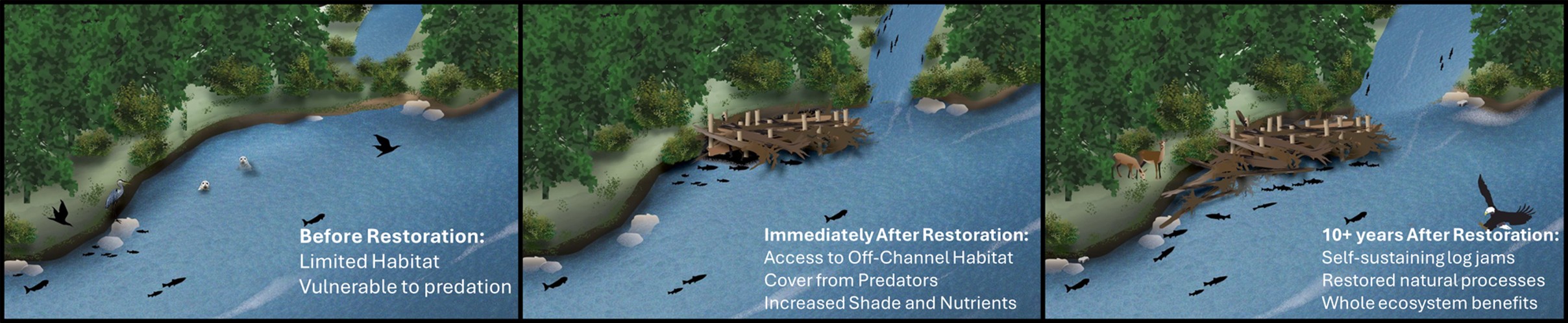
Illustration of the impacts of adding engineered log jams to a river with insufficient wood. Photo Credit: Tetra Tech
Did you know that healthy rivers in the Pacific Northwest are full of wood?
Both natural wood and engineered log jams provide habitat, food, and refuge for salmon. Water scours around wood structures, creating deep pools for salmon to rest in. The wood itself shades the river, keeping temperatures cool and protecting fish from predators. Bugs and smaller fish also like to hide in and around wood, offering prey to eat.
Large wood also slows fast-moving waters and encourages floodplain connection. A more connected floodplain decreases erosion, reduces flood hazards to people living near the river, and supports habitat for deer, birds, and other wildlife.
In the early 20th century, the Quillayute River lost much of its large wood due to efforts to open the river for navigation by larger ships. Now, there is far less wood in the river — believed to be less than 10% of historical levels. Adding wood back into the river helps restore the processes that keep the river healthy and productive for fish.
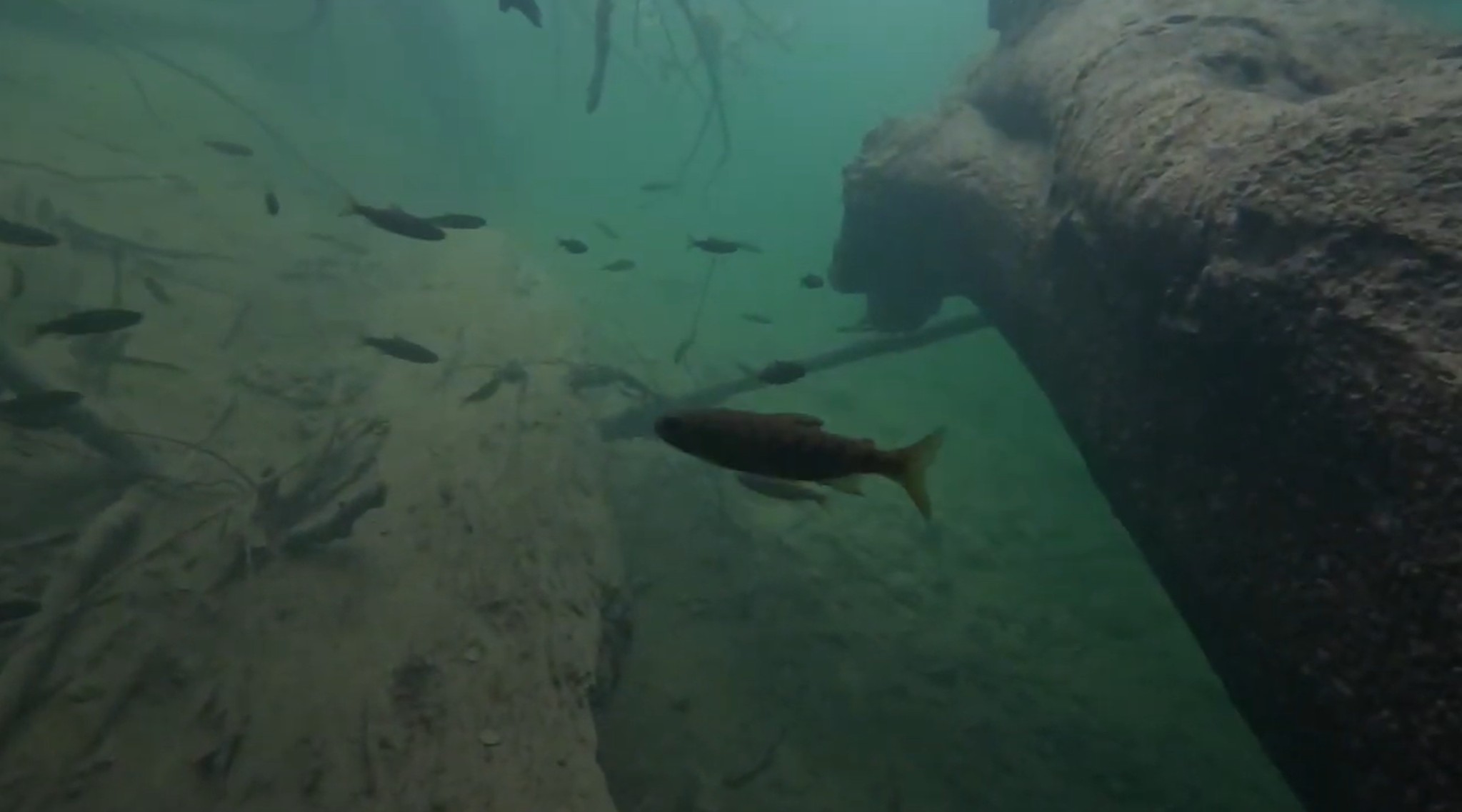
Fish using wood structure put in as part of restoration. Photo Credit: QNR
How to stay in touch:
To learn more information and share your contact details, please contact the QNR Habitat Program with questions and to learn more about the project:
- restoration@quileutetribe.com
- (360) 640-5243
Visit our Facebook Page for Regular Updates!
Use this link, scan the QR code, or search for Quillayute River Restoration Project on Facebook.

Funding for this project comes from: The Quileute Tribe; Washington Coast Restoration and Resiliency Initiative through the Recreation and Conservation Office; Department of Ecology; and the Climate Commitment Act (CCA). The CCA supports Washington’s climate action efforts by putting cap-and-invest dollars to work reducing climate pollution, creating jobs, and improving public health. Information about the CCA is available at www.climate.wa.gov